
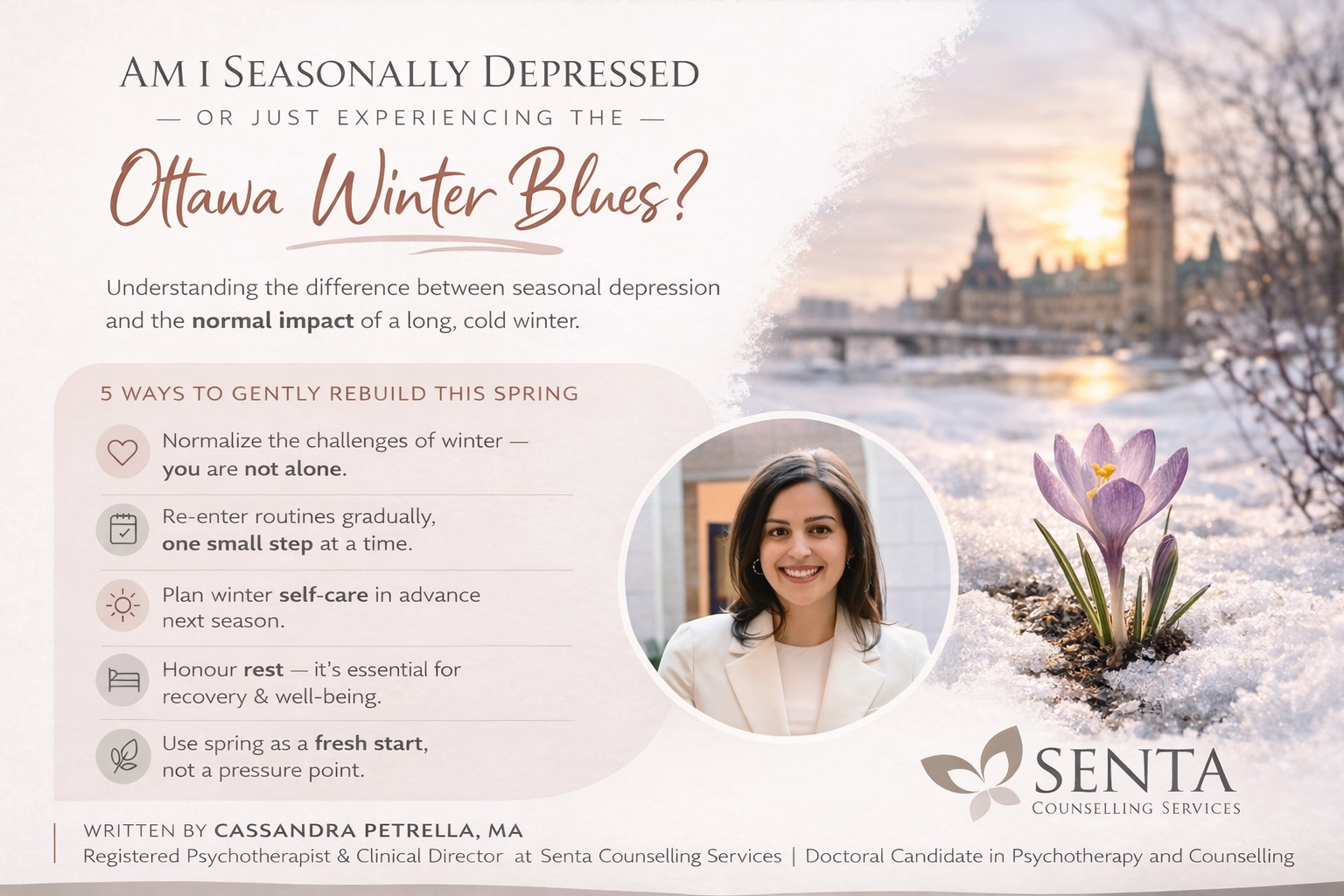
Am I Seasonally Depressed – or Experiencing the Ottawa Winter Blues?
Each winter, many people in colder climates begin to question their mood. By February, it is common to hear clients ask: “Am I depressed, or is this just winter?” In cities such as Ottawa, where temperatures can drop below −30°C, snowbanks can limit outdoor movement, and daylight hours are significantly reduced, it is important to recognize that environmental conditions alone can temporarily influence mood, motivation, and energy.
What Is Seasonal Affective Disorder (SAD)?
The distinction between seasonal depression and what might be described as winter blues is important. Seasonal Affective Disorder (SAD) also referred to as Seasonal Depression, is a form of depression that follows a recurring seasonal pattern and is associated with persistent symptoms such as low mood, significant fatigue, changes in sleep or appetite, difficulty concentrating, and a loss of interest in activities that were previously meaningful. These symptoms typically last for weeks or months and meaningfully interfere with daily functioning.
Why Ottawa Winters Can Affect Mood
In contrast, many people experience shorter periods of lowered motivation or emotional fatigue during particularly difficult stretches of winter. In Ottawa, February can be especially challenging. Extreme cold can limit time outdoors, viral illnesses circulate widely, and the cumulative effect of weeks of darkness can make daily routines feel heavier than usual. When illness disrupts exercise habits, social plans, or nutrition routines, it is common to experience a temporary dip in mood while trying to re-establish those patterns.
Importantly, this experience does not necessarily indicate clinical depression. Often, it reflects a natural response to environmental stressors and physical depletion.
One challenge that frequently emerges after these disruptions is the internal dialogue that follows. Individuals may begin to criticize themselves for falling out of routines: Why haven’t I gone back to the gym? Why is it so hard to restart? These thoughts often deepen discouragement and can create a cycle of shame that makes re-engaging with healthy habits even more difficult.
A more helpful approach involves recognizing the context of the season and responding with self-compassion rather than self-criticism.
Ways to Gently Rebuild After a Difficult Winter Period
1. Normalize the experience
Periods of reduced motivation during harsh winters are common. When illness, darkness, and environmental barriers accumulate, energy naturally shifts toward recovery and survival. Recognizing this context helps prevent interpreting temporary disruptions as personal failure.
2. Re-enter routines gradually
Rather than expecting an immediate return to previous habits, focus on small, attainable steps. A short walk, a brief home workout, or preparing one nourishing meal can serve as a meaningful starting point. Consistency often rebuilds momentum over time.
3. Plan winter self-care proactively
Because northern winters are predictable, proactive planning can be helpful. This might include identifying accessible indoor exercise options, scheduling social connections during darker months, or intentionally incorporating light exposure and outdoor time whenever conditions allow.
4. Honour rest as a legitimate form of self-care
Many people, particularly women balancing multiple roles, underestimate the importance of rest. After periods of illness or seasonal strain, allowing the body additional recovery time can support both physical and emotional regulation. Check out CMHA’s new The Rest Workbook, to learn some tips on how to rest better.
5. Use seasonal transitions as a reset point
March often marks a psychological turning point. As daylight slowly increases, it can be a natural opportunity to reflect on the winter season with kindness and begin setting small intentions for the months ahead.
A Compassionate Perspective
Living in a northern climate means that our environment inevitably influences our energy, routines, and emotional states. Not every difficult winter period reflects depression. Sometimes it reflects the simple reality of navigating months of cold, darkness, and illness.
Approaching these experiences with self-understanding allows individuals to re-engage with healthy patterns without the burden of shame or self-criticism. When we respond to ourselves with compassion rather than judgment, we create the conditions necessary for sustainable recovery and renewed well-being.
And as spring begins to emerge, even in small ways, it can serve as a reminder that shifts in mood and energy are often part of natural seasonal rhythms.
If you are noticing ongoing low mood, fatigue, or loss of motivation that feels difficult to move through, speaking with a therapist can help.
The team at Senta Counselling Services provides psychotherapy support for individuals navigating seasonal stress, burnout, and mood challenges. To book an appointment with Senta Counselling Services to start your spring wellness goals, fill out a New Appointment Request Form.
Article written by Cassandra Petrella, MA, Doctoral Candidate, Psychotherapist & Clinical Director, Senta Counselling Services
Per erat natum scribentur eu, ne vim congue ullamcorper. Sint rebum graeco ad ius. Qui no invidunt legendos. Sea an atqui choro melius. Ex sea suas dictas pri case.
View all posts by Cassandra Petrella, MA